
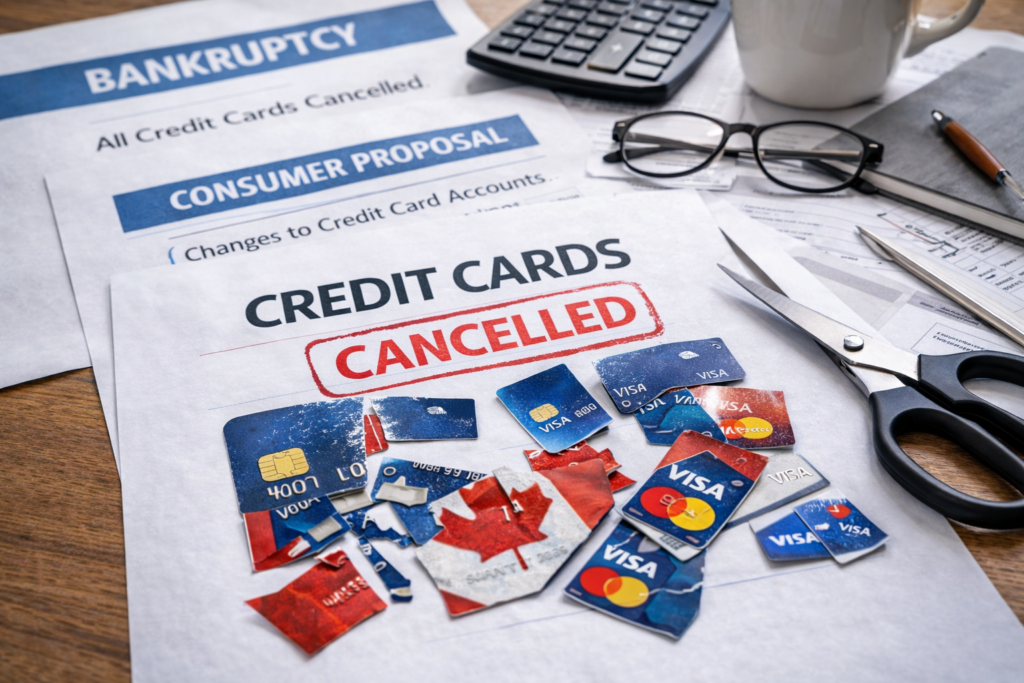
Many Canadians considering debt relief worry about one thing:
“Will I lose my credit cards?”
The honest answer is: in most cases, yes, but there’s more to understand.
Here’s what actually happens.
What Happens to Credit Cards in a Consumer Proposal?
When you file a Consumer Proposal:
All unsecured creditors included in the proposal are notified
Your existing credit cards are typically cancelled
You cannot continue using those accounts
Even if your card has a zero balance, many lenders will close it once they learn you filed.
This is standard practice.
What Happens in Bankruptcy?
In bankruptcy:
All credit cards must be surrendered
Any outstanding balances are included in the bankruptcy
Accounts are permanently closed
You cannot keep active unsecured credit cards during bankruptcy.
Why Are Credit Cards Cancelled?
When you file either a Consumer Proposal or bankruptcy:
You are legally stating you cannot repay your debts as originally agreed.
Lenders reduce their risk by closing revolving credit accounts.
Can You Get a Credit Card Again?
Yes, and often sooner than people expect.
Many individuals qualify for a secured credit card shortly after filing.
A secured card:
Requires a refundable deposit
Reports to credit bureaus
Helps rebuild credit with responsible use
Using a secured card properly can significantly improve your credit profile over time.
What About Joint Credit Cards?
If you share a joint credit card:
The co-signer or joint holder remains responsible for the balance
The lender may freeze or close the account
The joint holder’s credit may be impacted
It’s important to review joint debts carefully before filing.
Life Without Credit Cards
Many people find that temporarily living without revolving credit:
Helps break reliance on debt
Encourages budgeting
Reduces financial stress
Debt relief is designed to reset your finances, not to permanently block your access to credit.
Rebuilding Is Possible
After filing:
Focus on on-time payments
Build savings
Use secured credit responsibly
Keep debt levels low
Credit recovery is a process, and it begins with stability.
Talk to a Licensed Insolvency Trustee
Before filing, it’s important to understand:
Which debts are included
How your specific lenders may respond
What your rebuilding plan could look like
A Licensed Insolvency Trustee can walk you through your options and help you plan ahead.
Disclaimer: This article is for informational purposes only and does not constitute legal advice. Formal insolvency proceedings in Canada are governed by the Bankruptcy and Insolvency Act and must be administered by a Licensed Insolvency Trustee.