
If you’re considering a Consumer Proposal, one of the most important questions is:
“What debts can actually be included?”
Understanding which debts qualify — and which do not — is essential before making any decision.
Here’s how it works in Canada.
What Is a Consumer Proposal?
A Consumer Proposal is a legal debt relief program filed through a Licensed Insolvency Trustee under the Bankruptcy and Insolvency Act (BIA).
It allows you to:
Reduce the total amount you owe
Stop interest
Stop collection calls
Stop wage garnishments
Make one fixed monthly payment
But not all debts are treated the same.
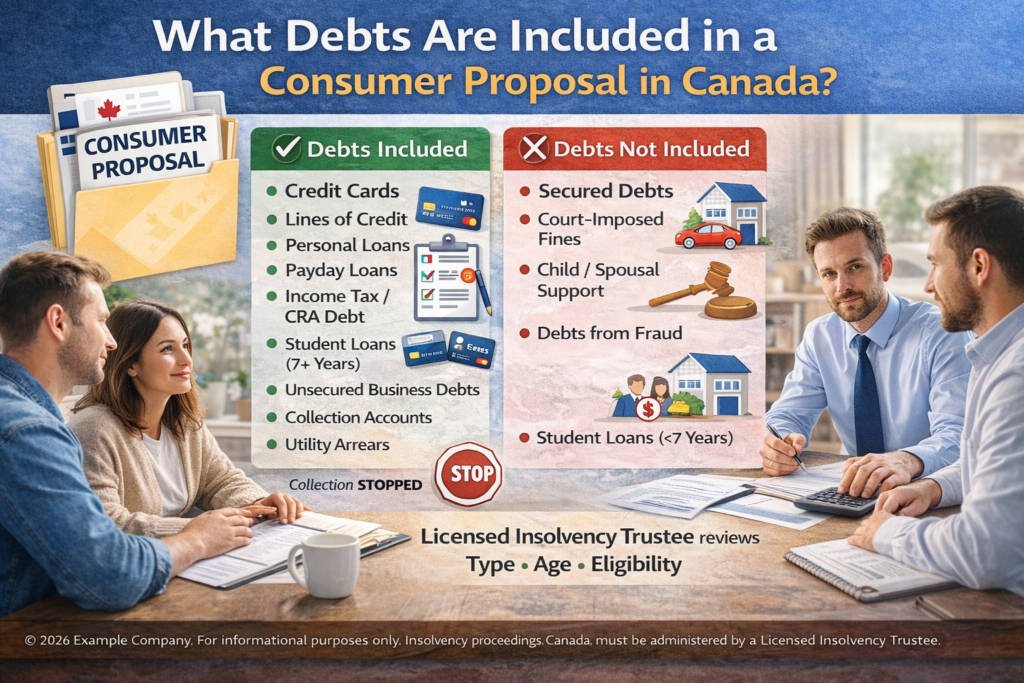
Debts That Are Included
Most unsecured debts can be included in a Consumer Proposal.
Common examples include:
Credit cards
Lines of credit
Personal loans
Payday loans
Income tax debt
CRA debt
Student loans (if you’ve been out of school for 7+ years)
Unsecured business debts
Collection accounts
Utility arrears
Once filed, collection activity must stop.
Debts That Are Not Included
Certain debts cannot be eliminated through a Consumer Proposal.
These include:
Secured debts (like mortgages or car loans)
Child support and spousal support
Court-imposed fines or penalties
Debts arising from fraud
Student loans (if less than 7 years since you stopped studying)
Secured debts can still be maintained — but they are not reduced through the proposal.
What About CRA Debt?
Yes — Canada Revenue Agency (CRA) debt can be included.
This includes:
Personal income tax
HST/GST
Source deductions (in some cases)
Once the proposal is filed, CRA collections must stop.
Every Situation Is Unique
The type and age of your debt matters.
A Licensed Insolvency Trustee will:
Review each creditor
Confirm eligibility
Explain how each debt is treated
Calculate an affordable repayment plan
Clarity Before Commitment
Before filing, make sure you understand:
Which debts are legally included
Which debts must still be paid
How your total repayment is calculated
Getting accurate advice ensures there are no surprises.
Disclaimer: This article is for informational purposes only and does not constitute legal advice. Formal insolvency proceedings in Canada must be administered by a Licensed Insolvency Trustee.