
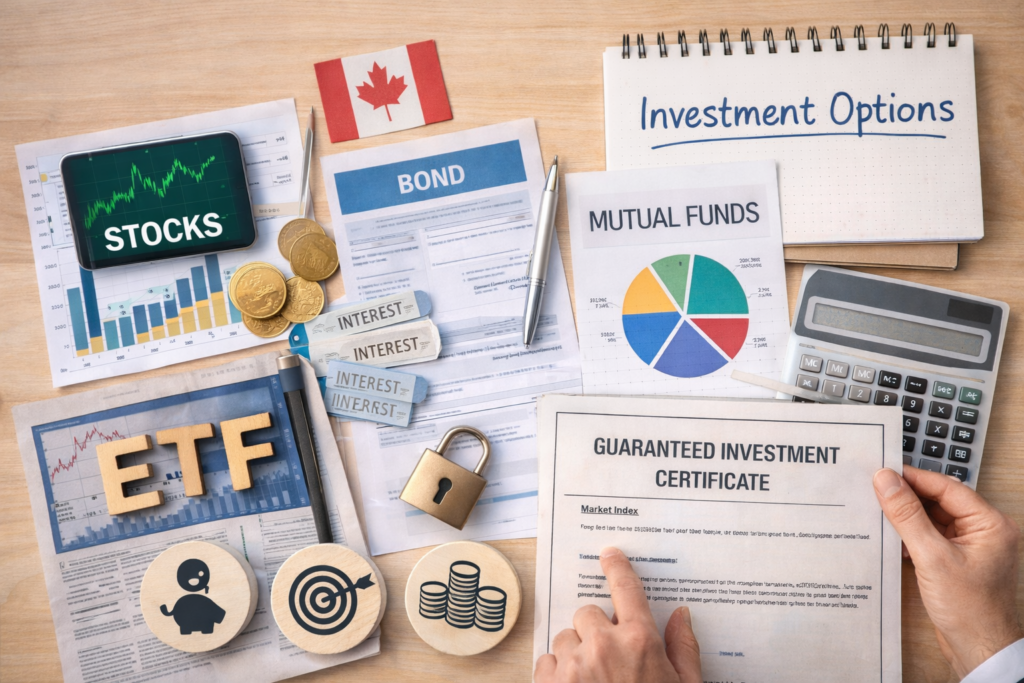
If you’re starting to build wealth, you may be wondering:
“What are my investment options?”
Understanding the basics can help you make confident financial decisions.
Here’s a simple breakdown.
Stocks
When you buy a stock, you purchase a small ownership share in a company.
Potential benefits:
- Long-term growth
- Dividends (in some cases)
Risks:
- Prices fluctuate daily
- Market volatility
Stocks are generally considered higher risk but higher potential return.
Bonds
Bonds are loans you give to governments or corporations.
In return, you receive:
- Regular interest payments
- Your principal back at maturity
Bonds are typically lower risk than stocks but offer lower returns.
Mutual Funds
A mutual fund pools money from many investors to buy a mix of:
- Stocks
- Bonds
- Other securities
They are managed by professionals and provide diversification.
Exchange-Traded Funds (ETFs)
ETFs are similar to mutual funds but:
- Trade like stocks
- Often have lower fees
- Track market indexes
They are popular for long-term investing.
Guaranteed Investment Certificates (GICs)
GICs offer:
- Guaranteed returns
- Very low risk
However, growth is typically modest.
The Right Mix Depends on You
Investment choices depend on:
- Age
- Risk tolerance
- Income
- Financial goals
Diversification is often key.
Disclaimer: This article is for informational purposes only and does not constitute investment advice.